North Carolina AI Startup Cloneable Raises $4.6M for Infrastructure AI
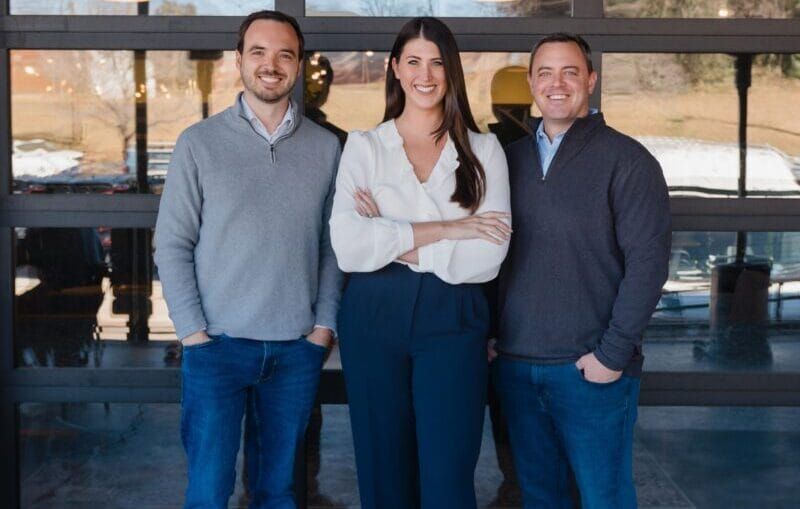
RALEIGH, April 23 (Hypepotamus) - North Carolina-based entrepreneur Lia Reich has a task for you.
“When you’re driving down the street or walking through the park, just take note of how many utility and telecom poles you see,” she told Hypepotamus.
Most people don’t really take in the realities of our built environment. That invisibility, Reich argues, is part of the problem. “You don’t think about the infrastructure that’s all around you that keeps our lights on, that keeps us connected to the internet — until there’s a problem.”
The reality is that a problem is right on the horizon. A large percentage of transmission and distribution infrastructure across the US is nearing its intended lifespace, and we are putting more and more pressure on the grid. The consequences? higher utility bills, power delays, potential blackouts, and gaps in connectivity.

PlayerZero is an AI production engineer that builds a living model of how your software actually works.
But Reich, CEO of Raleigh, North Carolina-based Cloneable, knows there is also a human workforce reality impacting our grid.
The engineers and operators who built and maintained America’s infrastructure are retiring at a rapid pace. And when they leave, they take decades of expertise with them.
“That knowledge was built over 30-year careers, living in the heads of the best people in the room. Cloneable exists because that expertise is too valuable to lose.”
AI For Our Energy Future
Cloneable was founded in 2023 after Reich and her co-founders built their careers in the commercial drone industry. The company launched its first product, an AI-powered field app, in early 2025. The platform streamlined field workflows like pole inspections (for improving safety, inspection speed, and data quality).
But it was the field teams themselves who pushed Cloneable toward its next chapter. Reich said that Heads of Operations at companies Cloneable was working at were looking for more solutions to help with their data capture and their back-office capabilities. That insight drove the development of Cloneable Agent, a platform that turns any back-office workflow into an AI agent by shadowing a company’s own experts as they work in the desktop and web-based software they already use. This means capturing institutional knowledge and deploying it at scale.
Purpose-built templates for energy workflows like make-ready engineering, permitting, and joint use are showing time-to-value in as little as 24 hours, according to the company.
Inside The Fundraise
Alongside the launch of its Agent solution, Cloneable is also announcing the close of its $4.6 million seed round.
The raise ultimately came together at $4.6 million, led by San Francisco-based Congruent Ventures. The firm’s focus on the energy transition and sustainable infrastructure made them a natural fit for the North Carolina-based startup. Other investors include DC-based First In, Atlanta-based Overline, Texas-based St. Elmo Venture Capital, and North Carolina-based Bull City Venture Partners.
Reich told Hypepotamus that she began fundraising just 45 days after having a baby, and gave her team a three-month deadline to get it done.
For Reich, staying and building in North Carolina is intentional.
Reich isn’t new to building in the Triangle. Her previous company, Precision Hawk, was also based in Raleigh, and the experience convinced her to stay. The region’s so-called “boomerang” talent, professionals who grew up in North Carolina, migrated to coastal tech hubs, and eventually came home, has helped the team start to scale.
The round will fund expansion into infrastructure-intensive sectors including public utilities, vegetation management, construction, rail, mining, agriculture, and manufacturing — markets that Reich describes as chronically underserved by point solutions.
The team ended 2025 with five full-time employees and has since grown to nine. Two to three additional hires are planned for 2026, with another wave expected in 2027.
For Reich, the growth has brought an unexpected kind of satisfaction: Hiring people outside her existing network who believe in the mission anyway.
“As a founder, one of the more humbling things is getting people who aren’t in our inner circle and telling them about our vision, and having them say, ‘Yes, I believe in this. I’m going to move forward with you. I’m going to put my livelihood and my time and investment into this.’ That has been wonderful.”
See more Hypepotamus stories in your search results