They’re Leaving the Cameras On—And Building a Startup Live on Twitch in Chattanooga
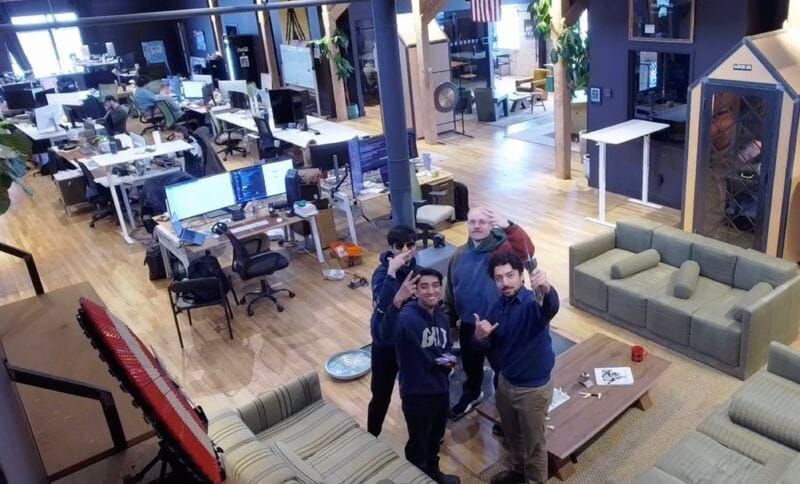
CHATTANOOGA, April 27 (Hypepotamus) - Pull up the Brickyard Twitch stream on any given weekday (or, often, well past midnight) and you’ll find the same thing: Shazor Khan and his team sitting at their desks, heads down, building a startup.
No ping-pong tables or catered lunches that you might expect at a startup office. No “glamorous,” over produced social media video content. Just work…broadcast live to whoever wants to watch.
Khan is the co-founder of Scaylor, a data unification company he runs alongside his brother and co-founder Shaheer Khan out of Brickyard, a startup accelerator in Chattanooga, Tennessee. The team has made a habit of streaming their workdays in full on Twitch, the interactive livestreaming platform long associated with gaming and entertainment.
The camera stays on. The audio stays off. And any sensitive dashboards or company information stays out of frame.

Gridline helps advisory firms launch, operate, and scale private market investment programs through one integrated platform.
Livestreaming The Startup Life
The premise is almost aggressively unglamorous. And that, Khan says, is entirely the point.
“Sometimes it can feel like you’re inclined to just play ‘building a startup,'” Khan said. “Fundamentally, we are not doing that here. Being able to show everybody what our day-to-day looks like at any point in time is really amazing.”
The livestream started as a feature of Brickyard’s community culture, providing another layer of “radical transparency” to the spot that has made its name as a heads-down place for startups ready to build.
“It is very hard to build a startup, and it requires a lot of work,” Khan said. “And I think there’s this truth that comes from just coming here and working around people all the time.”

There is another benefit for fellow founders building alone. Seeing someone else on the other end of the journey in real time carries its own value, Khan told Hypepotamus.
“It’s a very hard road to do this job, and there’s not nearly as much infrastructure as you would think there is,” Khan said. “Being able to just have someone else on the other end experience their version of that journey is very helpful in all of those moments, whether good or bad.”
His advice to other founders looking to livestream their work?
“Don’t make it more than what it needs to be,” he said. “It’s collaborative, not performative.”
Building Scaylor in Public
So what, exactly, are they working on?
Scaylor is building an analytics platform that sits on top of a company’s existing technology stack, unifying data that is typically fragmented across a mix of CRMs, ERPs, point-of-sale systems, HR software, and accounting tools. The target customer is the mid-market and mid-tech enterprise (which Khan described as those in the $25 to $50 million or more in annual revenue range that don’t have large internal data teams).
Khan, who has a background in finance and computer science, says the team “fell into the problem” they’re now solving. An early use case surfaced in private equity, where firms needed stronger diligence tools in the AI Age. As conversations expanded to portfolio companies, the Scaylor team realized that manufacturing, logistics, and industrial businesses, alongside companies managing multiple physical locations, had some of the most acute needs.
That focus on manufacturing and logistics is part of what brought Scaylor to Chattanooga. The team got its start in Khan’s home in Chicago before connecting with Brickyard and relocating last summer. Other early employees of the nine-person team include CTO Sher Zahed, founding engineer William Goode, and CRO Jeremy Boudinet.
The rest of the year, Khan says, is about proving that mid-market companies don’t need months of implementation to get real answers from their data.
“The rest of 2026 is about owning the data unification layer for mid-market enterprises,” he said. “We’re focused on expanding into more companies, deepening the product across both data engineering and BI workflows, and proving that enterprises don’t need months of setup to get real answers from their data.”
The camera, presumably, will stay on while they do it.
See more Hypepotamus stories in your search results