The Atlanta Startup Racing to Build Defenses Against the Next Terror Threat: Robotic Warfare
Askari Defense wants to be the Southeast's go-to defense company, bringing unlimited kinetic defense to life.
Whether they fly, crawl, walk, or run, robots have become hard to miss in our day-to-day lives. Waymo cars navigate city streets. Robots deliver our food.
But there's a darker side to robotics…one that Atlanta-based entrepreneur Robbie van Zyl says most people haven't fully clocked yet.
"For a lot of my early life, I've been obsessed with robotics," he told Hypepotamus. "But more recently, I've become obsessed with the ways that robotic systems can be used for malicious use cases."
Unmanned systems, including drones, are ushering in the age of robotic warfare. Such technologies have already impacted the ongoing Russia-Ukraine war, shaping tactics and overall the overall death count. But unmanned systems have also caused havoc closer to home, like in 2024 when a man was charged with attempting to use a drone to take down a power facility in Tennessee.
Low cost robotic threats are already here, according to van Zyl. "The next terror threat will very likely be something that is either enabled by robotics or actually executed by an unmanned system.”
The question is whether the defenses arrive before the threats do.
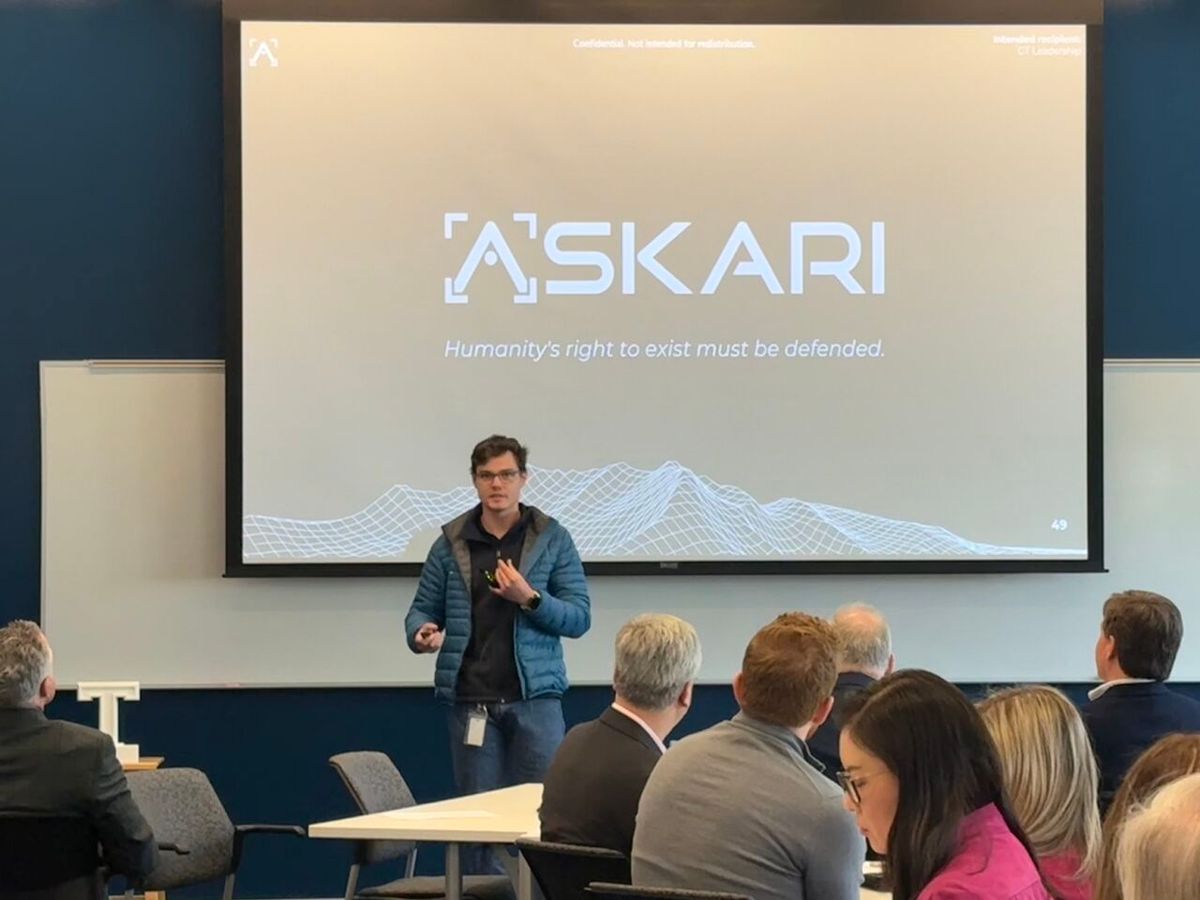
That defense is exactly what van Zyl, alongside co-founders Benjamin Airdo and Marc van Zyl, is building with Askari Defense. They are on a mission to build an "infrastructure product line that makes a very Terminator-esque outcome impossible.”
And after getting their start in the Bay Area, they have strategically moved to Atlanta to scale.

Gridline helps advisory firms launch, operate, and scale private market investment programs through one integrated platform.
Building For a Safer Future
Askari Defense is building low-cost intelligent kinetic defenses for the age of robotic warfare. Its “armory” of technologies include a fully 3D-printed drone interceptor, a foldable man-packable interceptor, and other classified intercept options.
As a kinetic infrastructure company, Askari Defense relies on thousands of hours of real-world flight data to help track and neutralize fast-moving drone robotics threats.
Now, how does the team ensure their technology isn’t misused?
Van Zyl told Hypepotamus that the architecture itself is the answer. Because Askari's systems are built to distinguish between specific target types (a drone versus a person versus a ground vehicle), the software can be locked down to defined use cases.
"We can very much restrict the systems in terms of their use case," he said. "It effectively makes our technologies incredibly safe."
From San Francisco To The Southeast
Askari's path to Atlanta wasn't a straight shot. Van Zyl got the company off the ground in San Francisco, then left his full-time role to pursue it. The team relocated to Chattanooga to join Brickyard, before eventually landing back in Atlanta.
All three co-founders went to Georgia Tech. The university, van Zyl said, is "in my opinion, the greatest institution on planet earth, from a hiring, talent, professors, and infrastructure perspective."
Beyond the alma mater pull, Atlanta also puts the team close to the national security customers they're building for.

"We're really doubling down on the Southeast as being our long-term home," van Zyl said. The goal is to become the top defense company for the Southeast.
"We really do believe that there are people building vaporware in this space," van Zyl told Hypepotamus. "We want to be the antithesis of that.”
On its website, Askari Defense lists the Department of Homeland Security, the US Army, the US Navy, and other military departments as partners.
Fuel To Scale
Southeast-based investors have flocked to back Askari Defense in its early days. Even before going through Georgia Tech’s Create-X program last year, the team had brought in pre-seed funding to scale.
Askari Defense is listed as part of the portfolio for Atlanta-based Overline VC, Atlanta-based Knoll Ventures, Chattanooga-based Brickyard VC, and San Diego-based Blackwing Ventures.
The company now operates out of the Biltmore Building in Midtown Atlanta.Van Zyl previously served as a propulsion engineer at Skydio, a San Francisco drone company that is backed by Andreessen Horowitz and NVIDIA. He also built his early career at Anduril Industries and UPS.
-Featured photo from LinkedIn
See more Hypepotamus stories in your search results