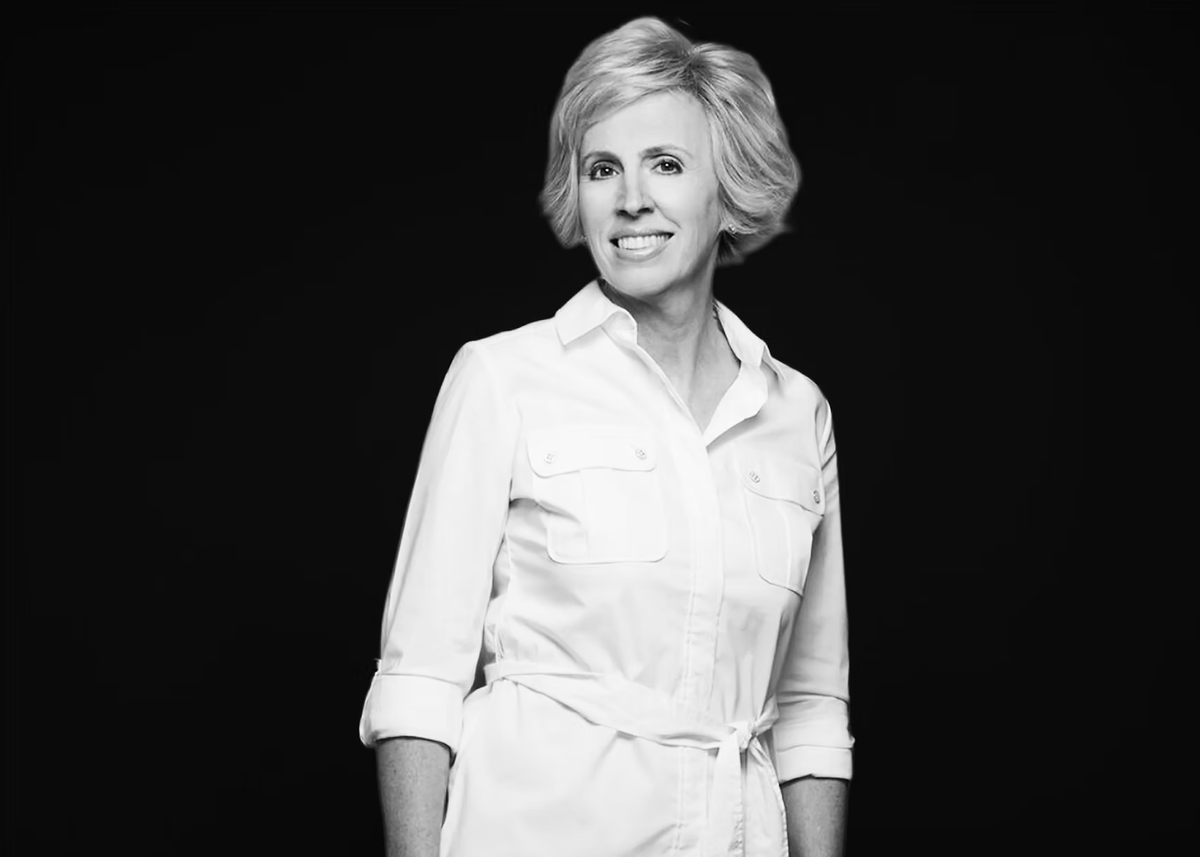
“We are the world’s largest minority group. Here we are in every community on planet earth," said Alabama entrepreneur Drew Ann Long.
For Drew Ann Long, every trip to the grocery store was a reminder that the world hadn’t been designed with her daughter in mind.
Long is a Birmingham, Alabama-based entrepreneur and mother of three children. Her middle child, Caroline, has lived her entire life with a severe disability. As Caroline grew, Long watched the options available to her family quietly disappear. She sized out of toddler cart seats options. The electric motorized carts designed were not something Caroline could operate independently. And nothing in between existed for older children or adults with disabilities.
“We are the world’s largest minority group. Here we are in every community on planet earth,” she told Hypepotamus. In 2008, she just could not believe there was not a cart option to help families like hers.
The reality is that none of the US manufacturers of shopping carts (of which there are four major ones) saw the need.
But Long, and many other parents, did.
Despite having no engineering or product design experience, she decided she would design the fix she needed.
Inside a Caroline’s Cart
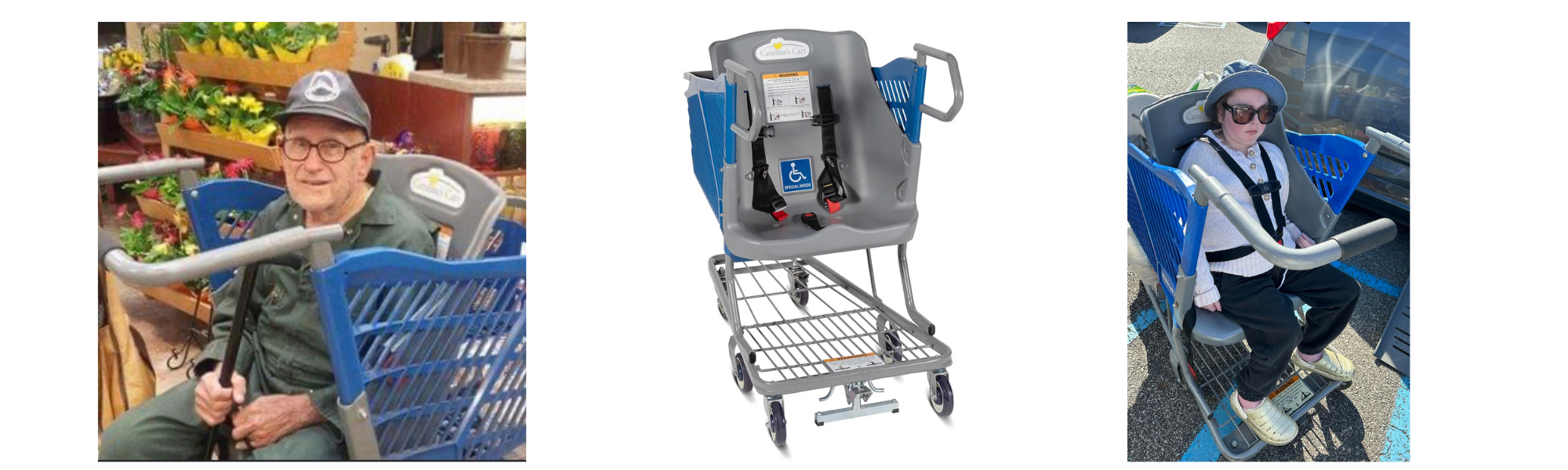
Caroline’s Cart is a patented specialty shopping cart built specifically for the disability community, seniors, and individuals with limited mobility.. Caroline’s Cart integrates a rear-facing seat equipped with an adjustable five-point harness. The seat accommodates individuals weighing anywhere from 35 to 250 pounds.
The design is also intentionally designed for caregivers. Fixed handles eliminate pinch points, and additional wheels provide even weight distribution across the cart to support full-grown passengers. Multiple safety features are built throughout, ensuring the shopping experience is secure for both the rider and the person pushing the cart.
Long sketched the original concept on a napkin. The vision was clear enough. Getting anyone else to see it would prove to be another matter entirely.
Manufacturing A New Idea
As a stay-at-home mom, she found that engineering and design firms simply would not take her meeting. Firm after firm declined to engage with her idea.
She eventually found a partner in Indianapolis, Indiana willing to help transform her napkin sketch into a functional design. With a concept in hand, she turned to the next link in the chain: shopping cart manufacturers. There are only four in the United States. She approached all of them. Every single one said no.
Long ended up spending $28,000 of her own money to build the first full-scale prototype of Caroline’s Cart. Then she posted photographs of it on Facebook. Her inbox was flooded. Parents from around the world reached out, sharing their own stories, their own frustrations, their own hope that something like this might actually exist someday.
The customer demand was real. The problem?
“I created a product that the consumer wanted but the consumer couldn’t buy it. I had to bypass the consumer to get to the retailer,” she said. And those retailers did not want to take on the additional shopping cart expense (an expense that they could not just pass on to the customer).
So she and her husband decided to produce the first real run of 100 carts (though a fire at the manufacturing plant meant she only got 88). The whole process cost her family half a million dollars, requiring them to dip into retirement savings to fund production.
She sold each of those 88 carts individually, mostly to mom-and-pop stores and locally owned grocers scattered across the country. The first sale went to a small, independently owned food store in Chicago, Illinois.
Then, finally, the big players came knocking. Slowly, still.
Building Demand
The lesson she learned over years of navigating the corporate retail landscape? “Don’t take a no from someone who can’t say yes.”
Eventually, the market she had built from scratch started to pull in the larger retailers. Families who had found Caroline’s Cart in smaller stores began calling bigger stores they frequented and demanding to know why it wasn’t available there. One of the four major shopping cart manufacturers finally reached out to her.
“They said we weren’t willing to take the risk,” Long recalled. “I had to create the demand and to prove that this truly was needed in the market.”
By 2012, Long was getting Caroline’s Cart into Walmart locations, one store at a time.
It took until the summer of 2024 before corporate Walmart announced that Caroline’s Cart would be available at every one of its U.S. stores.
Today, Caroline’s Cart is present in 15,000 retail locations across all 50 states. It can be found in every Target, every Lowe’s, and every Wegmans. The cart has also crossed international borders, now available in eight countries.
Long has been recognized by Walmart and Target for her work. Michelle Obama acknowledged her efforts. Her story has been covered by the Today show, CNN, Inside Edition, and CBS News. She is now a professional speaker and the founder of Caroline’s Cause, a nonprofit built around the same mission of inclusion and accessibility that started with a napkin sketch.
“Nothing was like I thought it would be.”
Through the nos, the financial strain, and the years without income, Long said she always saw the need to bring this product to life.
“I lived this need,” she said. “I lived it daily…I know the struggles of a special needs family.”
Eighteen years later, Long is still building. She still spends her days trying to get Caroline’s Cart into more stores. But she is also dedicated to her speaking engagements and building her non-profit, Caroline’s Cause, which awards scholarships to qualifying high school seniors who have a sibling with a severe intellectual disability. Her speaking engagements help fund those scholarships.